HUTB Held Xiangjiang Advanced Interdisciplinary Studies and Lectures for Cadres
2023-11-30
On the afternoon of November 26, the university held the Xiangjiang Advanced Interdisciplinary Studies and Lectures for Cadres at the Xiangjiang Lecture Hall. All Chief Leaders, members of the CPC Committee, deputy department level and above cadres, CPC branch secretaries, department heads, and teaching and research section directors attended the event.
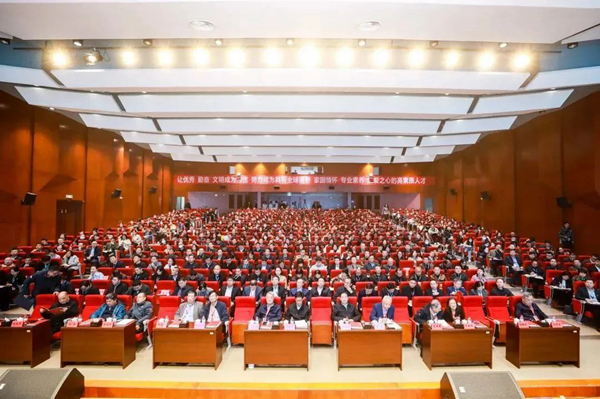
The Xiangjiang Advanced Interdisciplinary Studies and Lectures for Cadres were conducted in two stages.
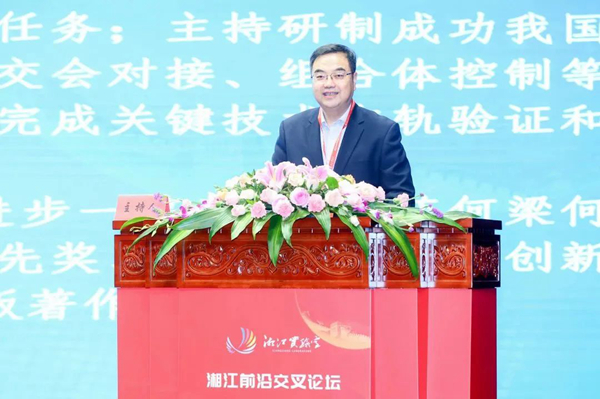
The first stage was hosted by Academician Yang Hong from the Chinese Academy of Engineering (CAE).
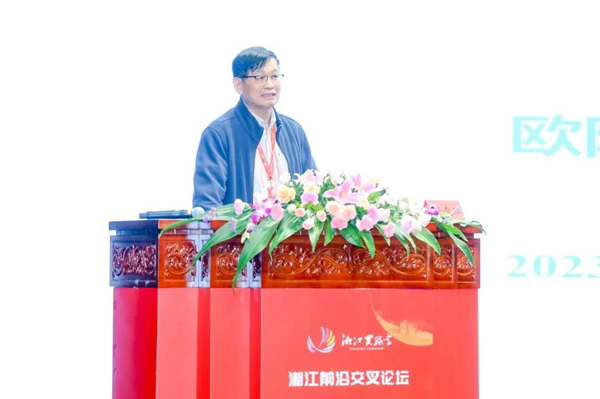
Ouyang Xiaoping, academician of CAE, presented an academic report titled "Technological Strategies for Developing High-Energy-Density Lithium Batteries". He elaborated on five parts related to the development of high-energy density lithium batteries, including "research and development status", "strategy: application research of polycrystalline 9-series ultra-high Ni cathode", "strategy: special new electrolyte", "strategy: ultra-thin copper foil composite negative electrode technology", and "the first graphene diaphragm technology". He pointed out that in order to overcome the technical bottlenecks associated with lithium metal negative electrodes, it has become a major research and development focus to replace lithium metal negative electrodes with other high-capacity and safer negative electrode materials for ultra-high energy density long-cycle lithium batteries. In the field of high-energy density lithium batteries, it is necessary to persist in innovation and strive for future success through intelligence.
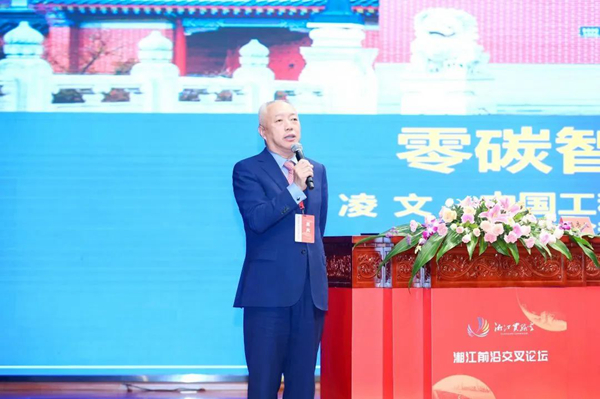
Ling Wen, academician of CAE, presented an academic report titled "Exploration and Practice of Zero-Carbon Smart Highways". He used the "Jiqing Middle Line Highway" as an example to share insights from four aspects: project background and technical ideas, innovation points and key technologies, technical and economic indicators and advantages, and engineering application evaluation and socio-economic benefits. He emphasized the zero-carbon smart framework system, key technologies and equipment for precise perception and safety guarantee of highways, and other innovative points. He pointed out that in the future, it is necessary to continue researching, implementing, and refining the goals of "safe roads", "convenient roads", and "green roads", vigorously promoting the development of smart transportation and accelerating the construction of a transportation powerhouse.
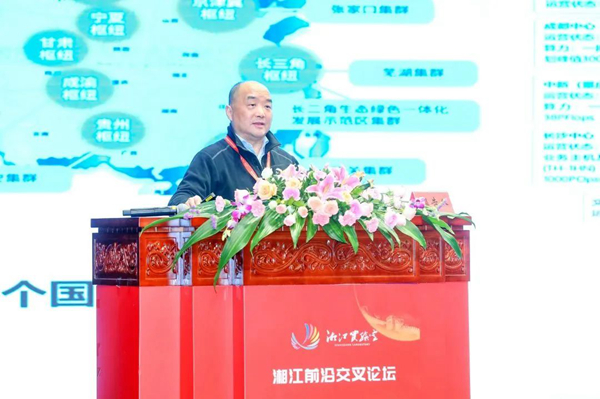
Wang Huaimin, a member of the Chinese Academy of Sciences (CAS), presented an academic report titled "Core Software System and Open Source Ecology for China's Computing Network". He first introduced the construction layout of large-scale data centers, supercomputing centers, and intelligent computing centers. Then, he elaborated on three dimensions: "vertical integration from within the computing center", "horizontal connectivity between computing centers", and "open source innovation from the evolution of the ecological network". He stated that it is necessary to form an advantageous ecological position through open source innovation, with the ability to establish dominant interdependent relationships and withstand attacks from interdependencies. He emphasized the need to cultivate open-source projects with global influence and build a Chinese open-source innovation platform that serves the world.
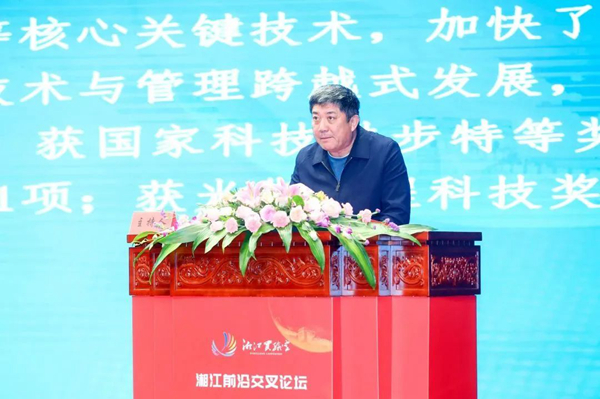
The second stage was hosted by Academician Liu He from CAE.
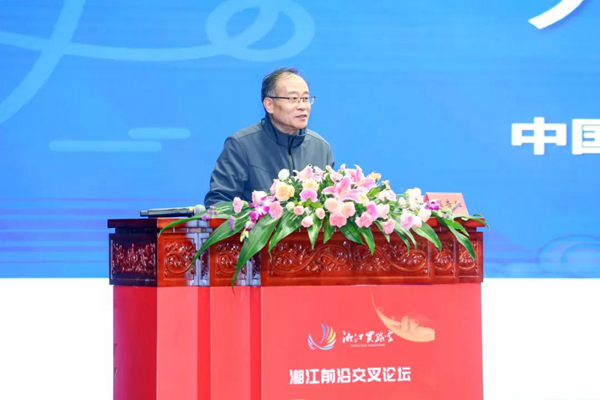
Fan Guobin, academician of the Chinese Academy of Engineering, who presented on "The Development of the Nuclear Medical Industry is Flourishing"; He shared insights on five aspects:"nuclear technology and industry", "nuclear technology medical industry", "FLASH radiotherapy", "layout of the nuclear technology medical industry in Mianyang City", and "reflection and prospects". He pointed out that China's nuclear technology medical industry faces many practical challenges and should seek new technological breakthroughs, develop new tracks, protect local enterprises, and promote industry development. He believes that under the strategic guidance of "Beautiful China, Safe China, Healthy China", civil nuclear technology will make China "more beautiful, safer, and healthier".
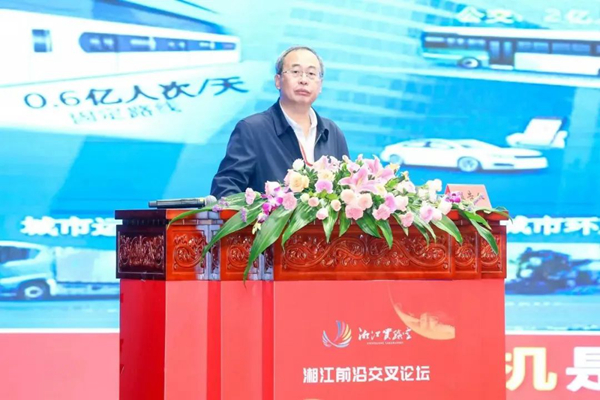
Xiang Jinwu, academician of the Chinese Academy of Engineering, who presented on "Unmanned Aerial Vehicles Leading the New Era of Intelligent Transportation"; He elaborated on the development trend, cutting-edge technology, and proposed measures, analyzing in depth the impact of key technologies such as flight platform, intelligent network and information transmission technology, autonomous control technology, green energy technology, and intelligent airspace management technology on the application of drone technology. He proposed that drone technology is an interdisciplinary and comprehensive technology involving multiple specialties. He emphasized the need to take technological innovation as the mainline, coordinate the construction of a technological innovation system, build an aviation industry system, develop a service support system, and promote the construction of a strong nation in transportation and aviation.
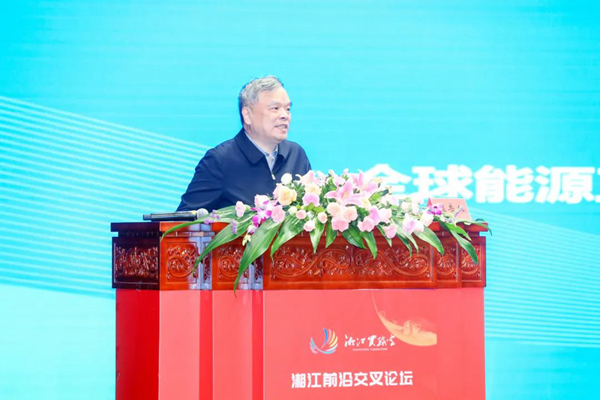
Liu Zehong, Executive Vice Chairman of the Global Energy Interconnection Development and Cooperation Organization, who presented on "Inclusive, Just, and Resilient Transformation of Global Energy: Plans and Practices"; Based on research in three aspects: "challenges and ideas", "pathways to achieve carbon neutrality in the global energy interconnection", and "three major collaborations to promote inclusive, fair, and resilient transformation", he drew conclusions. He pointed out that the high-quality green transformation of high-energy industries provides new development opportunities for developing countries in green and sustainable industrialization. It converts the advantages of clean energy resources into economic advantages, promotes clean energy cooperation between countries and regions, enhances carbon reduction efforts globally, and helps achieve global carbon neutrality goals.
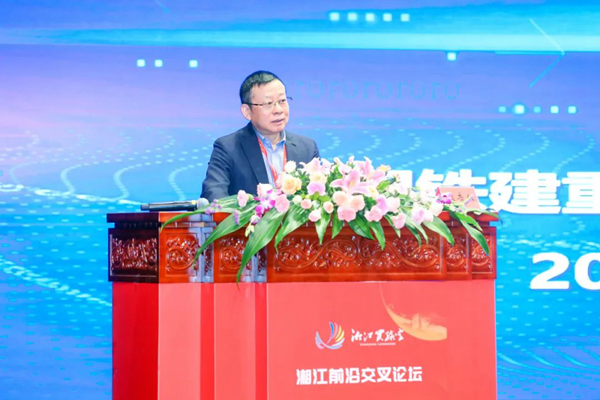
Liu Feixiang, chief scientist of China Railway Construction Heavy Industry Corporation Limited, who presented on "Research and Application of Digital Prototyping and Digital Twin Technology for Underground Engineering Equipment". He focused on analyzing the "digital prototype technology for underground engineering equipment" and the "digital twin technology for underground engineering equipment" from the aspects of conceptual understanding, key supporting technologies, research and development, and application. He proposed that digital prototype and digital twin technologies are fundamental and common technologies for enterprise digital transformation, equipment intelligent upgrading, smart manufacturing, and intelligent construction. The breakthroughs and implementation experiences in these technologies will undoubtedly further propel China's overall digital research and development capabilities for complex engineering equipment to an internationally leading level. (Written by Yang Lei and Xu Xiaolei and Photo by Converged Media Center)