Breaking News | HUTB Approved to Establish National-Level Major Innovation Platform
2025-11-19
Recently, the Ministry of Education announced the second batch of philosophy and social sciences laboratory construction list, with 25 laboratories nationwide selected for inclusion. With Academician Chen Xiaohong of the Chinese Academy of Engineering as Director of the laboratory, the Intelligent Governance of Complex Social Systems Laboratory, jointly established by HUTB and Central South University, has been officially approved. It becomes one of only two Ministry of Education Philosophy and Social Sciences Laboratories selected in Hunan Province to date. HUTB stands as the sole provincial university in Hunan to receive a Ministry of Education Philosophy and Social Sciences Laboratory.
On May 17, 2016, General Secretary Xi Jinping emphasized at the Symposium on Philosophy and Social Science Work that it is essential to implement the innovation project for philosophy and social sciences, build innovation platforms for philosophy and social sciences, and comprehensively advance innovation across all fields of philosophy and social sciences. In December 2020, the Ministry of Education officially launched the pilot construction of key laboratories for philosophy and social sciences. In December 2021, the first batch of 30 Ministry of Education philosophy and social sciences laboratories was announced. The implementation of the second batch of Ministry of Education philosophy and social sciences laboratories now represents a thorough practice of the important spirit of General Secretary Xi Jinping's speech.
The Intelligent Governance of Complex Social Systems Laboratory leverages the complementary scientific and innovation resources of Central South University and HUTB. With long-term expertise in intelligent decision-making theory and technology, ecological civilization construction, and smart urban governance, the laboratory pioneered research on national "Two-Oriented Society" (resource-saving and environment-friendly society) construction standards and actively participated in the formulation of 16 national "Two-Oriented" standards. The laboratory utilizes a series of high-level scientific platforms, including Xiangjiang Laboratory (one of Hunan's four provincial laboratories) focused on artificial intelligence and advanced computing, the Hunan "Two-Oriented Society and Ecological Civilization" Collaborative Innovation Center, the Hunan Provincial Key Laboratory of "Smart Transportation", the "Mobile Health" Ministry of Education–China Mobile Joint Laboratory, and the Hunan Engineering Research Center of "Big Data and Intelligent Decision-Making Technology for Ecological Environment" . Supported by projects such as the National Natural Science Foundation's Outstanding Research Group Program (formerly the Basic Science Center Project), Innovative Research Group Program, Major Program, National Key R&D Program, and National Social Science Fund Major Program, the laboratory has built a high-level intelligent governance database, facilitating deep integration of technological innovation and policy practice to provide robust support for high-quality urban development.
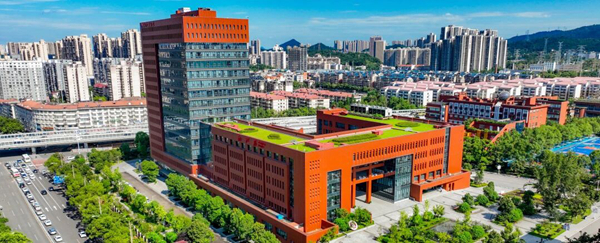
It is reported that the Ministry of Education Philosophy and Social Sciences Laboratory currently represents China's highest-level platform in this field, serving as a national major innovation platform. The successful approval of the Intelligent Governance of Complex Social Systems Laboratory is a significant achievement resulting from the university's educational philosophy of integrating "new engineering courses + new business courses + new medicine courses + new liberal arts courses" with science, marking a new stage in the construction of philosophy and social sciences laboratories at the university.
Moving forward, the laboratory will be guided by Xi Jinping Thought on Socialism with Chinese Characteristics for a New Era, serving the major strategic needs of Chinese modernization. Focusing on the core theme of "Intelligent Governance Empowering Chinese Modernization," it will engage in deep collaboration with Xiangjiang Laboratory. Leveraging Xiangjiang Laboratory's strengths in interdisciplinary integration across artificial intelligence, advanced computing, and big data, the laboratory will expand multidisciplinary research boundaries, establish an alliance for disciplinary integration, and build high-performance computing platforms. It will continue to promote the deep integration of "new engineering courses + new business courses" with science, construct a problem-oriented interdisciplinary research mechanism, and effectively facilitate the efficient output and practical application of scientific research achievements. Focusing on constructing an autonomous knowledge system in philosophy and social sciences, the laboratory aims to create a high-quality innovation platform that integrates "urban digital twins—AI policy simulation—international dissemination of Chinese governance solutions," equally emphasizing teaching, research, and policy consultation. This platform will provide theoretical paradigms and technical support for addressing modern urban governance challenges and building "livable, resilient, and smart" cities.
(Reported by Scientific Research Administration Division)