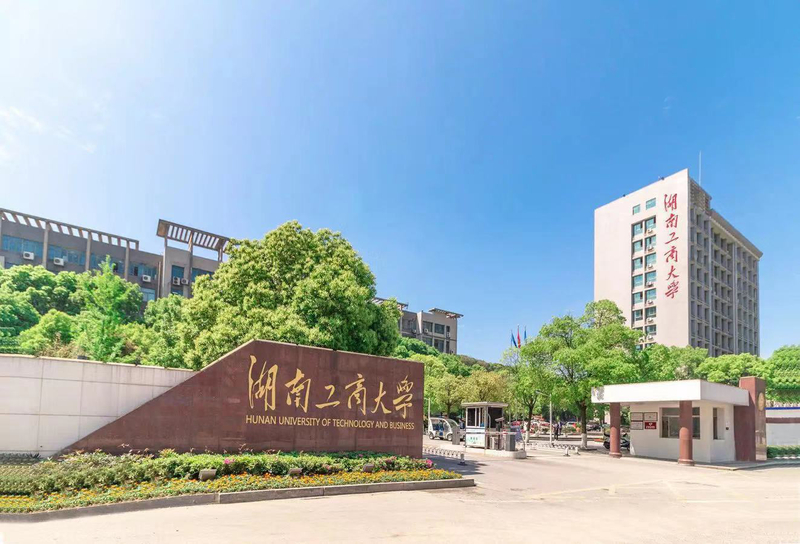
On the afternoon of June 10, Mao Wanchun, Chairman of the Hunan Provincial Committee of the Chinese People’s Political Consultative Conference (CPPCC), led a team to HUTB to conduct research on topics including “integrated reform and development of education, science and technology, and talent” and “promoting employment and entrepreneurship for university graduates,” and visited CPPCC members on campus.
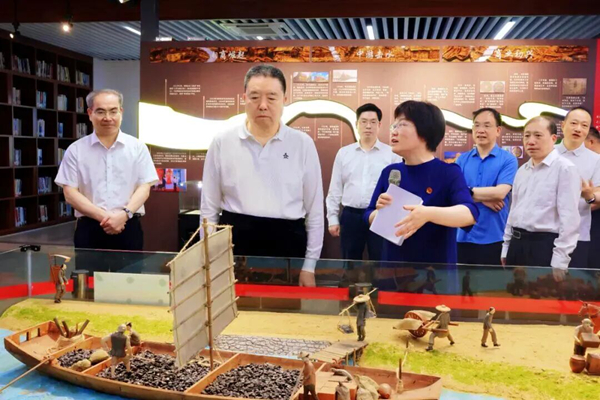
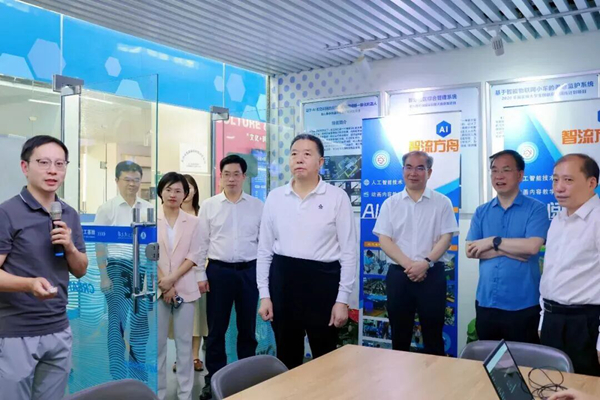
At the Xiangshang Culture Exhibition Hall and Chufeng Academy, the research team inspected on-site the university’s campus culture building and its frontline positions for ideological and political education. They reviewed in detail how the university leverages its Xiangshang (Hunan mercantile) cultural identity to run a “Academy + Multi-Function” service-and-education model. Mao encouraged the university to dig deeper into the contemporary value of Xiangshang culture, embed this distinctive culture throughout the mission of fostering virtue through education, nurture students’ character through cultural immersion, and keep polishing its brand of ideological and political education. He also called for deeper integration of ideological work with disciplinary education and hands-on practice, so as to cultivate a new generation of talents who carry the great national causes in their hearts.
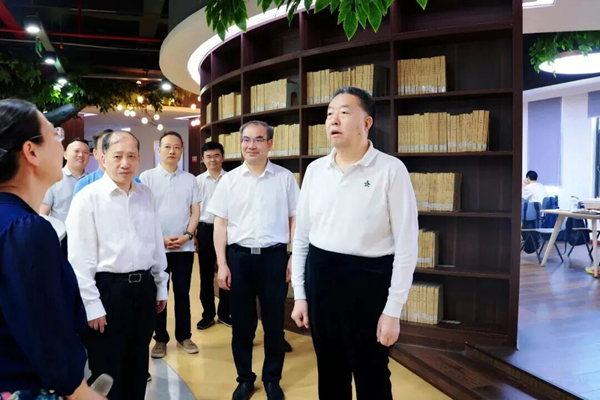
At the university’s Student Entrepreneurship Incubation Base and Creativity Gallery, the research team toured the Maker Workshop and an exhibition of innovation and entrepreneurship works by faculty and students. The focus was on the university’s “Two Excellences” reform, pathways for cultivating versatile entrepreneurial talent, its “Four-Chain Integration and Three-Creation Collaboration” education model, and the development of a full-chain innovation and entrepreneurship education system. Mao engaged in face-to-face conversations with representatives of entrepreneurial faculty and students, inquiring in detail about project incubation, achievement transformation, and the implementation of support policies. He fully acknowledged the university’s achievements in innovation and entrepreneurship education, encouraging the university to continuously deepen educational reform, strengthen practical teaching, promote the deep integration of “policy, industry, academia, research, finance, and application,” and constantly refine the innovation and entrepreneurship talent cultivation system. He urged the university to build a quality platform and create a favorable environment for young students to dare to explore and excel at innovating, so that they can blossom their youth while serving Hunan’s modern industrial system.
At the symposium, heads of HUTB introduced the university’s educational achievements, development plans, and efforts on student employment and entrepreneurship. Heads of the Proposal Committee and the Culture, Education, Health, Sports and History Committee of the CPPCC Hunan Provincial Committee, together with heads of the Department of Human Resources and Social Security of Hunan Province and the Hunan Provincial Committee of the Communist Youth League of China, as well as faculty and staff representatives and CPPCC member representatives from HUTB, exchanged in-depth views and proposals grounded in their actual work and around the research themes.
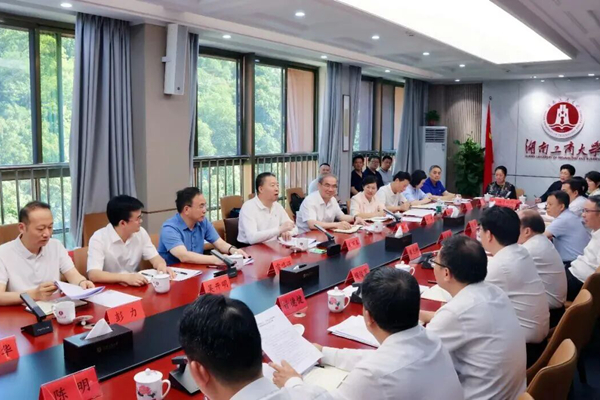
Mao noted that university graduates are a precious talent resource. He called for the full implementation of the requirements of the CPC Hunan Provincial Committee and the Hunan Provincial People’s Government on stabilizing employment and pooling talent. He urged a coordinated push of the employment-first strategy and the strategy of building a talent-strong province, and wholehearted delivery of employment and entrepreneurship services for graduates, so as to foster a vibrant climate where talent emerges in numbers, is put to proper use, and reaches its full potential. Mao expressed hope that the university will stay true to its founding mission of educating for the Party and nurturing talent for the nation, anchor itself to the beautiful blueprint of the “Three Highlands, Four New Missions”, uphold CPC leadership in guiding development, optimize its disciplinary and program layout, cultivate and strengthen distinctive, advantageous disciplines, and accelerate the building of a quality, distinctive application-oriented university. He pushed for efficient alignment of the education chain and talent chain with the industry, innovation and capital chains , advancing educational development, technological innovation and talent cultivation as one integrated effort. Relevant departments were told to implement and fine-tune employment and entrepreneurship support policies and provide whole-process services, so as to give solid backing to Hunan’s drive to build itself into a province friendly to young people.
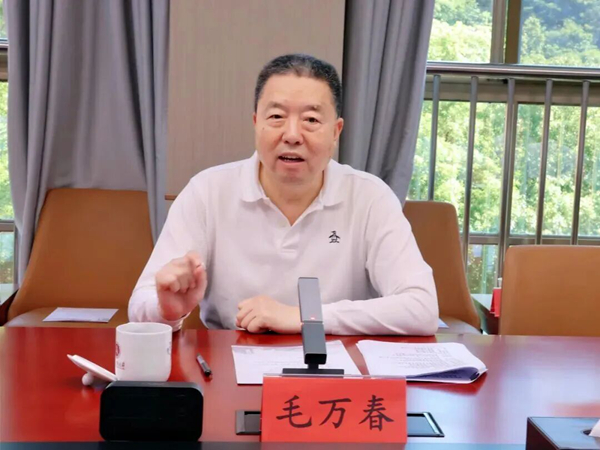
Mao stated that the provincial CPPCC system will fully leverage its strengths—being talent-rich, intellect-dense, and extensively connected—to conduct in-depth research and offer targeted policy advice on education, science and technology, talent, and the employment and entrepreneurship challenges facing young university graduates, so as to facilitate the effective implementation of relevant policies. By building platforms and bridging connections, the provincial CPPCC system will use high-quality consultation to continuously support the building of a young-people-friendly province and a leading education province, contributing wisdom and strength to writing the Hunan chapter of Chinese modernization.
(Source: Hunan CPPCC Cloud)